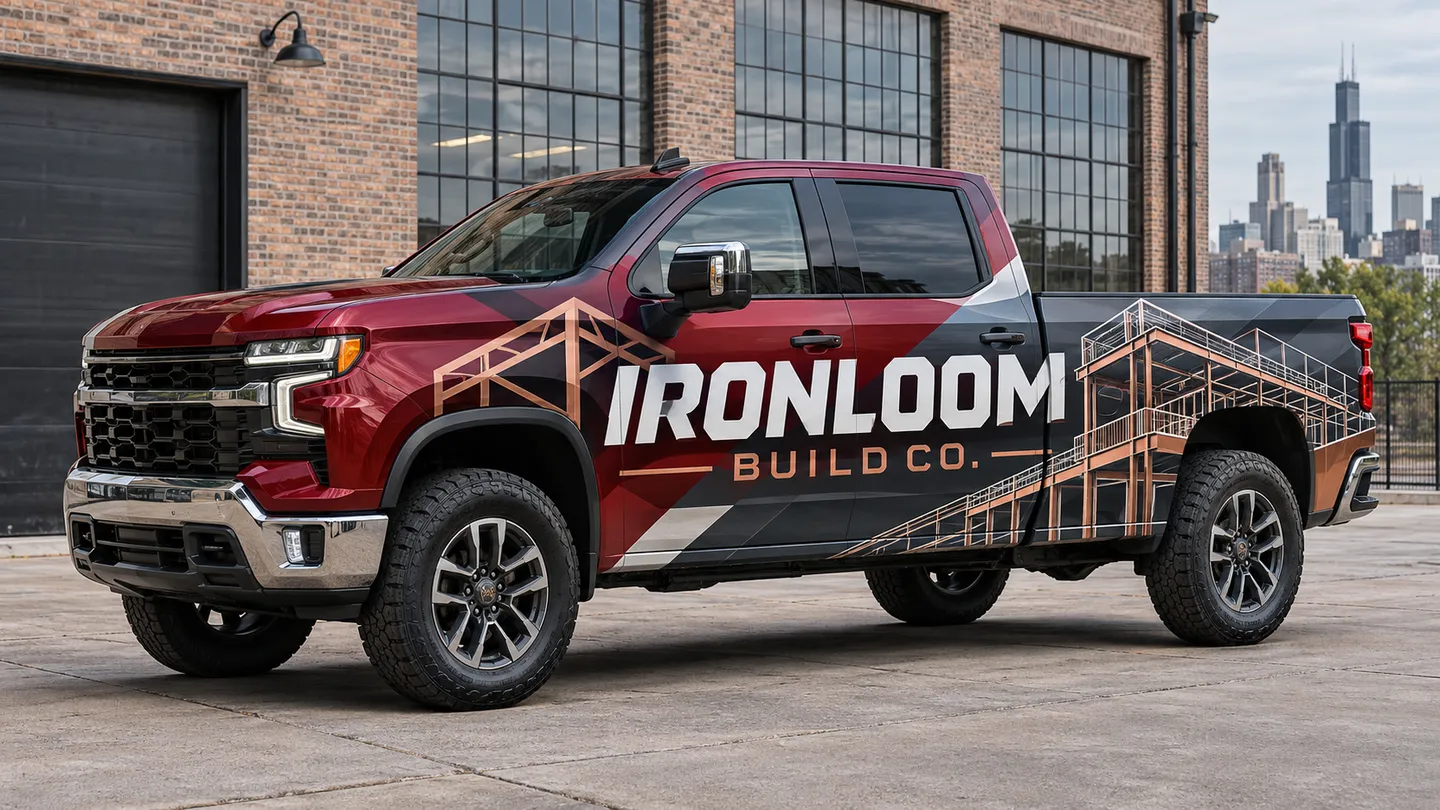
Locate the damage precisely
Take an overall photo showing the vehicle and a closer view of the affected area. Identify the side, compartment or panel using the body map. Include nearby seams, hardware and the limits of the damage so the supplier can discuss the practical boundaries of a possible replacement.
Explain whether the body itself is damaged or repaired, and whether new graphics are being considered before or after that work. Surface repair and graphic replacement need coordinated scope. The record should not imply that vinyl can conceal an unresolved paint or substrate problem.
- Pair a location photo with a detailed closeup.
- Identify whether body repair is involved.
- Use the original zone names where available.
Find the production references
Locate the approved artwork revision and installed material information. Ask the original provider what source files, printer references or color records are available. A picture of the existing truck helps explain appearance but is not the same as a production file that can be reprinted.
Tell the supplier about adjacent graphics that will remain. Age, exposure and the original construction can affect how a new piece appears beside existing work. Ask how the proposed repair will be assessed rather than assuming a newly printed panel will perfectly match an older surrounding installation.
- Identify the effective artwork and wording.
- Record known film and protection products.
- Show neighboring graphics that will stay in place.
Approve the replacement boundaries
Request a clear description of which graphics and surfaces will be removed or replaced. If a larger section is recommended, ask how that boundary relates to artwork continuity, preparation or the physical panel. Keep the decision separate from an unrelated expansion of coverage elsewhere on the truck.
Save the accepted replacement scope and update the vehicle’s graphics record after handoff. Keep new material and file references even if they differ from the first installation. The relevant manufacturer documents should be reviewed for the actual replacement construction rather than assumed from the age or brand of the original film.
- Agree replacement boundaries on a marked photo.
- Record revised product or artwork information.
- Update the vehicle record after the repair.
Keep a working record
Before you approve the next step
- Identify the vehicle and damaged zone.
- Photograph damage and adjacent graphics.
- Record body repairs or paintwork.
- Find original artwork and material references.
- Approve explicit replacement boundaries.
- Update the graphics record after delivery.
Use the free planning tool to organize the details you can confirm and the questions still open.
Four questions before the next step
Can a damaged area always be patched locally?
The supplier needs to review the artwork, surface, condition and practical replacement boundaries. A localized repair may be possible, but it should not be promised from the damaged area alone.
Read the detailed guide: Scope a damaged truck graphic by zone
Will a reprint always match existing graphics?
Do not assume an exact visual match. Give the supplier the available production records and show adjacent aged graphics so expectations can be discussed before release.
Read the detailed guide: Scope a damaged truck graphic by zone
Can one truck template cover the whole upfit?
Do not assume it. The cab, service body and equipment may need separate references and measurements. Ask the production provider how the actual combination will be verified.
Read the detailed guide: Map the cab and work body as separate graphics zones
Does marking a panel approve it for graphics?
No. The map communicates intended scope. Surface condition, access, dimensions and material suitability still need the supplier’s review.
Read the detailed guide: Map the cab and work body as separate graphics zones
Original technical sources
Use the linked publisher's current instructions for the exact product and vehicle. This planning guide does not replace its application, safety or warranty requirements.